Donkey Wisdom Dispatch
On Being a Donkey Among Smart People

Some rooms are full of brilliance—frameworks, fast talkers, clever metrics. I used to try to keep up. Then I stopped running. This dispatch is about what happens when you let yourself be slow, stubborn, and quietly wise in a system that doesn’t recognize softness as intelligence.
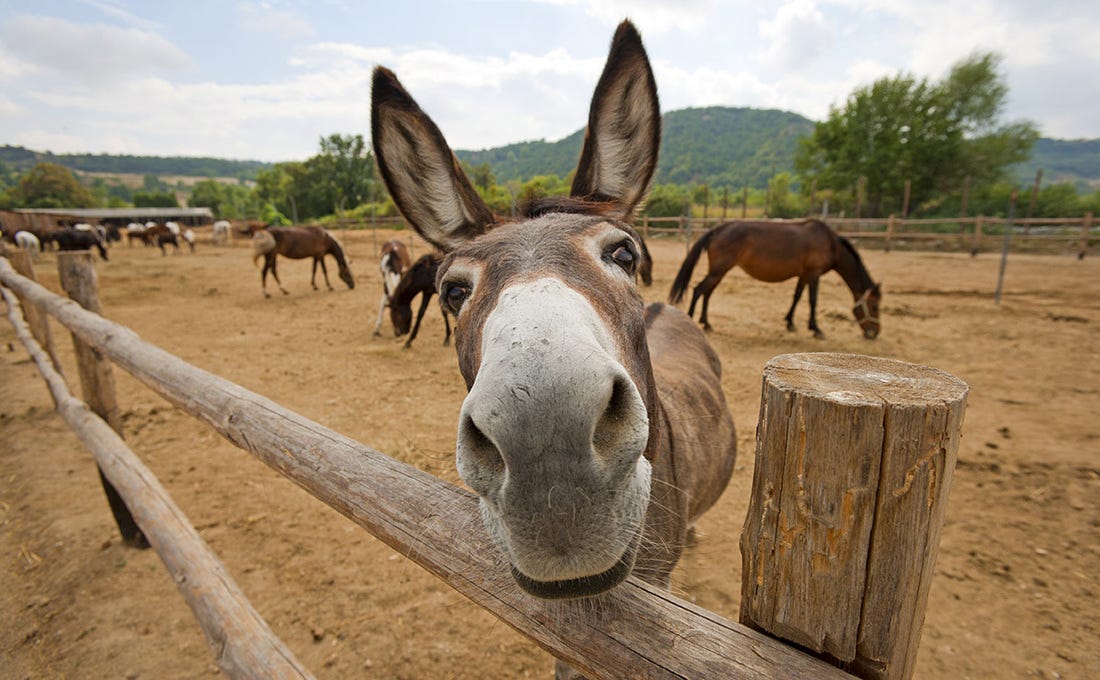
Maybe, just maybe, the donkey knows something the stallions don't.
I’ve spent most of my life surrounded by people who are much smarter than me — on paper.
They speak in frameworks.
They optimize everything.
They ask “What’s the ROI?” before they ask,
“Is it right?”
And for a long time,
I tried to keep up.
Until one day I realized:
maybe the only way to stay human
in a room full of hyper-functioning brains…
…is to be a donkey.
The slow one.
The stubborn one.
The one who doesn’t race,
but remembers where the ground is.
The Cult of Smartness is Exhausting
In academia, in startups,
in polished conference rooms —
smartness is currency.
You’re rewarded for saying something new
before saying something true.
You move fast.
Think fast.
Win fast.
But what you often lose in that race
is nuance.
Care.
Connection.
I’ve watched brilliant people
bulldoze complexity in the name of clarity.
I’ve seen ideas praised
because they’re impressive —
not because they’re useful.
So I slowed down.
I asked worse questions.
I listened for what didn’t fit the slide deck.
What Donkeys Know
Donkeys are not glamorous.
But they are steady.
Resilient.
Relational.
They don’t respond well to force,
but they will carry heavy loads —
if respected.
In some cultures,
donkeys are symbols of humility and patience.
In others: survival.
And I started to think —
maybe being the donkey in the room
isn’t a liability.
Maybe it’s a lens.
Donkeys don’t run ahead.
They notice cracks in the road.
They don’t dominate.
They endure.
Reverse Wisdom is a Resistance
Reverse wisdom is the kind that asks:
What if I don’t need to scale this?
What if slowness is a form of care?
What if I stop translating myself into a language that doesn’t see me?
It’s not about rejecting intelligence.
It’s about expanding the definition of intelligence —
to include feeling.
To include pause.
To include context.
And maybe that’s what we need now,
especially in a world
that’s building machines
faster than it’s building meaning.
Being a Donkey is Not Being Passive
I’ve been underestimated.
Ignored.
Put in the “support role” — not the idea role.
But that’s the gift.
When they expect less,
you can do more.
You can observe.
You can subvert.
You can tell stories that don’t fit the dominant plot.
And slowly, stubbornly,
you can move the weight of culture —
not by rushing,
but by refusing to drop what matters.
For the Other Donkeys Out There
If you’ve ever felt:
Too slow for the room,
Too sensitive for the system,
Too strange for the strategy —
Congratulations.
You might just be carrying
the kind of wisdom
this world needs most.
Stubborn.
Slow.
And deeply human.
I'd love to hear from you.
Have you ever felt like the "donkey in the room"?
What kind of wisdom did that slowness reveal?
Leave a reply below or hit that little heart if this resonated.
And if you know someone who's secretly wise in the most unoptimized way — forward them this.
Until next dispatch,
Z
i